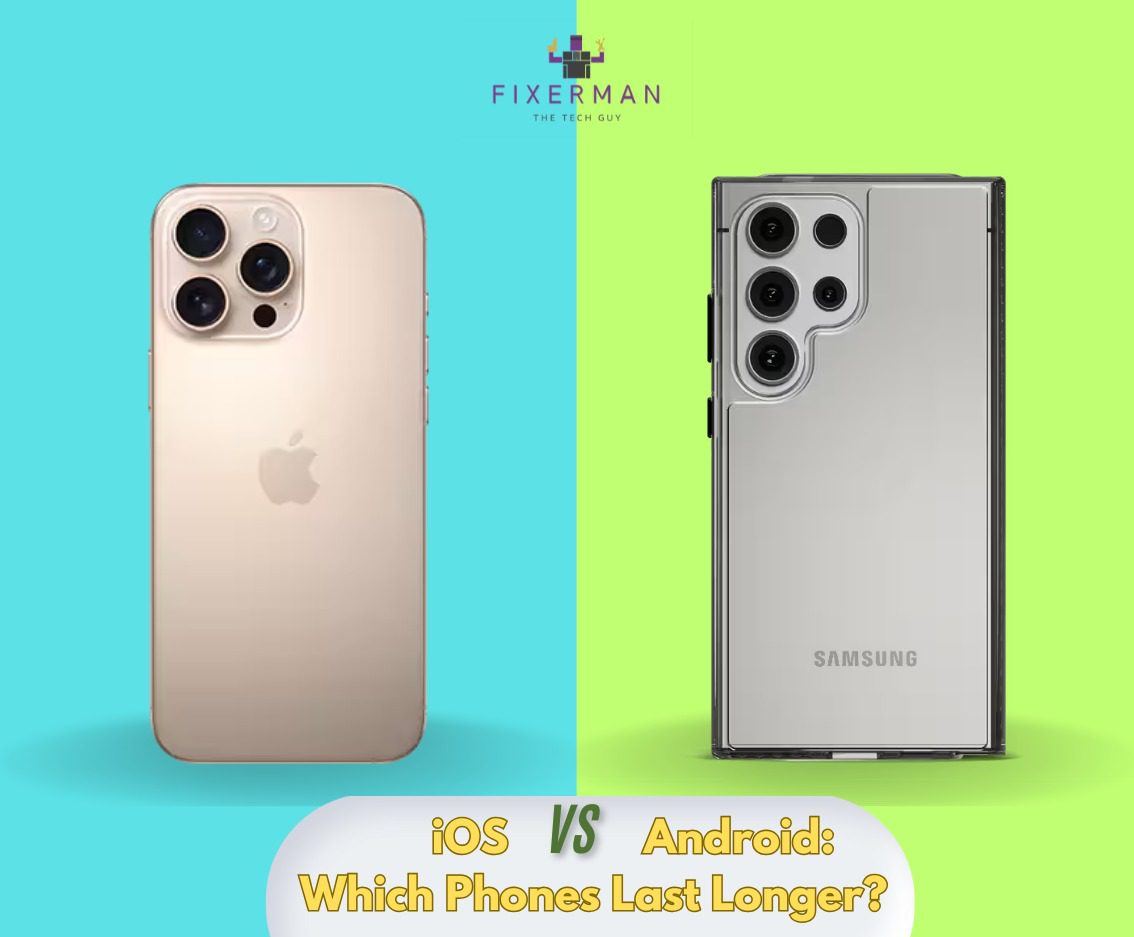
Longevity is not just “how long a phone turns on.” It’s how long it stays fast, secure, repairable, and worth using daily.
iPhones perform strongly here because Apple controls the entire system—chipset, operating system, and update rollout. This allows consistent optimization across all supported models. Most iPhones receive 5–7 years of updates, which keeps them secure and usable far beyond the typical upgrade cycle.
Android works differently. Each manufacturer controls its own hardware, software layer, and update policy. That means longevity varies widely. A fair comparison is not iPhone vs budget Android—it should be iPhone vs similarly priced flagship devices like Samsung Galaxy S series or Google Pixel.
These flagship Android phones have improved significantly. Many now offer up to 4–5 years of updates, which is close to Apple on paper. However, real-world usage tells a slightly different story.
From a repair and service perspective, older iPhones remain in active use far more often. Devices that are 4–6 years old still come in for battery replacements or minor repairs, indicating continued usability. With Android, even flagship models are less frequently seen at that age, suggesting users replace them earlier.
This gap is not only about updates—it’s about how well the device holds performance, app compatibility, and overall user experience over time.
Want Your iPhone to Last Longer?
Keep your iPhone in top condition with expert repair and maintenance services by Fixerman in Dubai.
Do iPhones Last Longer Than Android
In most real-world cases, yes—but not simply because of build quality. The difference comes from how long the phone remains usable without frustration.
iPhones tend to stay smooth even after several years because iOS updates are optimized for older devices. Performance may reduce slightly, but it rarely becomes unusable suddenly.
With Android, even flagship devices can experience earlier slowdowns due to heavier UI layers, background processes, and less consistent optimization across updates. While specs may still be strong, the experience degrades faster.
From a repair perspective, iPhones are more often repaired and reused, while Android devices are more often replaced once performance drops.
Do Samsung Phones Last Longer Than iPhones
Samsung has improved significantly, especially with its flagship models. On paper, update support is now close to Apple.
However, longevity is not just about how long updates are provided—it’s about how the phone feels after years of use. Samsung devices often remain powerful, but over time users may notice:
- Slower UI responsiveness
- Higher battery drain under load
- More background system activity
iPhones, in comparison, tend to maintain a more stable experience over time. So while Samsung can technically “last long,” iPhones usually last better.
iPhone vs Android Longevity
The practical difference comes down to consistency vs variability.
iPhones:
- Predictable lifespan
- Consistent performance across years
- Longer app support
Android:
- Highly dependent on brand and model
- Flagships can match iPhone short-term
- Mid-range devices drop off much earlier
So the gap is not always huge at the top end—but across the market, iPhones maintain a more reliable long-term experience.
Why iPhone Last Longer Than Android
The main reason is control and optimization.
Apple builds both the hardware and software together, which allows:
- Better performance tuning over time
- Efficient use of processor and memory
- Consistent update delivery
Android manufacturers work with shared software (Android OS) and customize it, which introduces variation. Even small inefficiencies compound over years, leading to earlier performance decline.
It’s not that Android hardware is weaker—it’s that long-term optimization is less controlled.
Do Androids Last Longer Than iPhones
In general, no.
Some flagship Android phones can last just as long in ideal conditions. But across typical usage, most Android devices are replaced earlier.
The reasons are practical:
- Shorter or less effective update cycles
- Performance drops becoming noticeable sooner
- Lower resale value reducing incentive to repair
So while exceptions exist, they are not the norm.
Samsung vs iPhone Longevity
This is the closest comparison today.
Samsung flagships offer strong hardware and improved update policies. In the first few years, the experience can be very similar to iPhone.
The difference appears later:
- iPhones tend to maintain smoother performance beyond year 3–4
- Samsung devices may still work well, but feel less consistent
In repair scenarios, older iPhones are more commonly serviced, while Samsung devices at the same age are more often replaced.
Are iPhones More Durable Than Androids
If we define durability only as physical strength, both iPhones and flagship Android phones use premium materials and are comparable.
But real durability includes long-term usability.
iPhones are more consistent here—they remain stable, supported, and worth repairing for longer. Android durability depends heavily on the specific model and brand.
iPhone vs Android Durability
Durability over time is a combination of:
- Hardware quality
- Software stability
- Performance retention
iPhones offer a more balanced result across all three.
Android devices can match or exceed iPhones in hardware, but software behavior over time is less consistent, which affects perceived durability.
Do iPhones Last Longer Than Samsung
Yes, in most practical scenarios.
Samsung has reduced the gap, especially in flagship models, but iPhones still lead in:
- Long-term performance consistency
- Continued usability after 4–5 years
- Higher resale value, making repair more viable
The difference is not dramatic in the early years, but becomes clear over time—iPhones are more likely to remain a daily-use device, while Samsung devices are more likely to be replaced.
Software Updates: Critical for Longevity iOS
Long-Term Support Apple grants software updates to iPhones for an impressive length of time. Normally, an iPhone receives major iOS updates for 5-7 years. For example, iPhone 6S released in 2015 was updated till iOS 15 in 2021. This advantage keeps iPhones safe from insecurities, allows new features to trickle in, and smoothens performance, ensuring that readiness for obsolescence is delayed for just a tad while the hardware ages.
In contrast, Android updates may vary from one manufacturer to another. Android: Varied Updates from One Manufacturer to Another Android phones seem to work with totally different update policies. Those of Google’s Pixel receive three to five major updates in Android. Samsung appears to now have stepped behind their flagship models with a promise of four years of major OS updates and five years of security updates from today. Almost all the economic and mid-range Android phones get only about 2-3 years of updates, and that renders them pretty much obsolete well ahead of others within the iOS ecosystem.
Hardware Durability and Performance Over Time iOS:
Software and Hardware Unlike Any Other Apple designs both hardware and software so that they integrate perfectly. iPhones are often made with materials like stainless steel and ceramic shield glass, making them sturdy. Further, A-series chips by Apple are the most powerful ones in the industry, being able to hold a candle to any chip for years to come. Well-optimized iOS updates keep older iPhones running smoothly.
Android: A Varied Canvas Android hardware is quality-variable. Flagships like Samsung Galaxy S, Google Pixel, and OnePlus prime the best materials and powerful chips to challenge the iPhones. Most inexpensive Android phones, unfortunately, are made with cheaper materials and mid-ranged processors that slow down quickly. Some manufacturers even actively limit the performance optimization of older devices, leading to performance degradation over some time.
Battery Life and Replacement Options iOS:
Aging Not so Good But, Replaceable Interestingly, batteries fitted in Apple’s iPhones get drained over time, resulting in throttled performance. While users can choose to replace their battery using Apple’s official service or third-party alternatives, replacement does not come cheap. In order to mitigate performance dragging, Apple has introduced management of battery health, but many users find battery life shortened after a few years.
Android: Variable Battery Life Battery life for Android has been generally better with an equally higher capacity. While some manufacturers, particularly Samsung and OnePlus, are ahead in battery health optimization, Androids follow similar degradation to iPhone when it comes to lithium-ion battery degradation. Most offer a serviceable battery that can be replaced easily; indeed, a few models come with user-replaceable batteries, although those are now rare in newer devices.
Repairability and Sustainability
iOS: Limited Repairability but Sustainable
Apple’s repair ecosystem is strictly controlled. The approved repair facilities are permitted to do repairs, while an independent repair shop usually struggles due to needing parts and software locks. Apple’s Self Service Repair Program allows a consumer to purchase official parts and fix their own devices, which is its step into sustainability. iPhones fetch high resale values, thus, they just make sense sustainability.
Android: More Repair and Not Last For Long
Many brands of Android phones, like Fairphone and Motorola, design their devices to make them repairable. Official repair programs are offered by Samsung and Google. However, many Android phones cannot last long enough considering that their obsolescence is faster and their software cutoffs arrive sooner. Some lower models become obsolete quickly generating e-waste complications.
Resale Value and trade-ins
iOS: Greater Resale Value
It has been found that Apple iPhones maintain their value better compared to some Android phones. An iPhone can get a good resale even after four to five years after use. In order to get these sufficiently strong incentives to upgrade to a new model, Apple also offers trade-ins.
Android: Decrease in Value Fast
Most of these Android devices tend to depreciate quite quickly. Yes, the Samsung or Google phones hold values well against the other brands, and there are still cases where most of these mid-range and budget Android phones lose worth quite rapidly. Trade-ins do not rate as high as that of iPhones either.
User Experience Over Time
iOS: Consistent Experience
Even on older iPhones, Apple manages to provide a smooth and constant user experience. There is performance throttling due to battery degradation, but an iPhone generally remains usable and reliable for years.
Android: Brand-Specific
Android is very much diverse in its own way. Google’s Pixel and high-end Samsung smartphones grow older gracefully with consistent software support, but many of the Android devices slow down and tend to encounter app compatibility issues or bloatware problems as time goes by.
Final Verdict: Which Exists Longer?
• iPhones (iOS) are likely to last longer than other counterparts due to prolonged software updates, better resale, and lesser dissimilar performance.
• Flagship Androids (Samsung, Google Pixel) have a pretty long life but usually not that long as iPhones.
• Generally, mid-range and lower budget Android phones do not live long due to limited software support and lower durability.
Damaged iPhone? We Fix It Express Fast
Quick iPhone screen and battery replacement in Dubai with high-quality parts by Fixerman.
Conclusion
Thus in case, if you are hunting for a smartphone that will remain functional and valuable for many years, an iPhone is the better long-term investment. However, a high-end Android device can still provide good longevity if one chooses a device with really strong update policies for those who demand customization, affordability, or specific features. Ultimately, your phone’s lifespan depends on how well you maintain it, regardless of the maker!