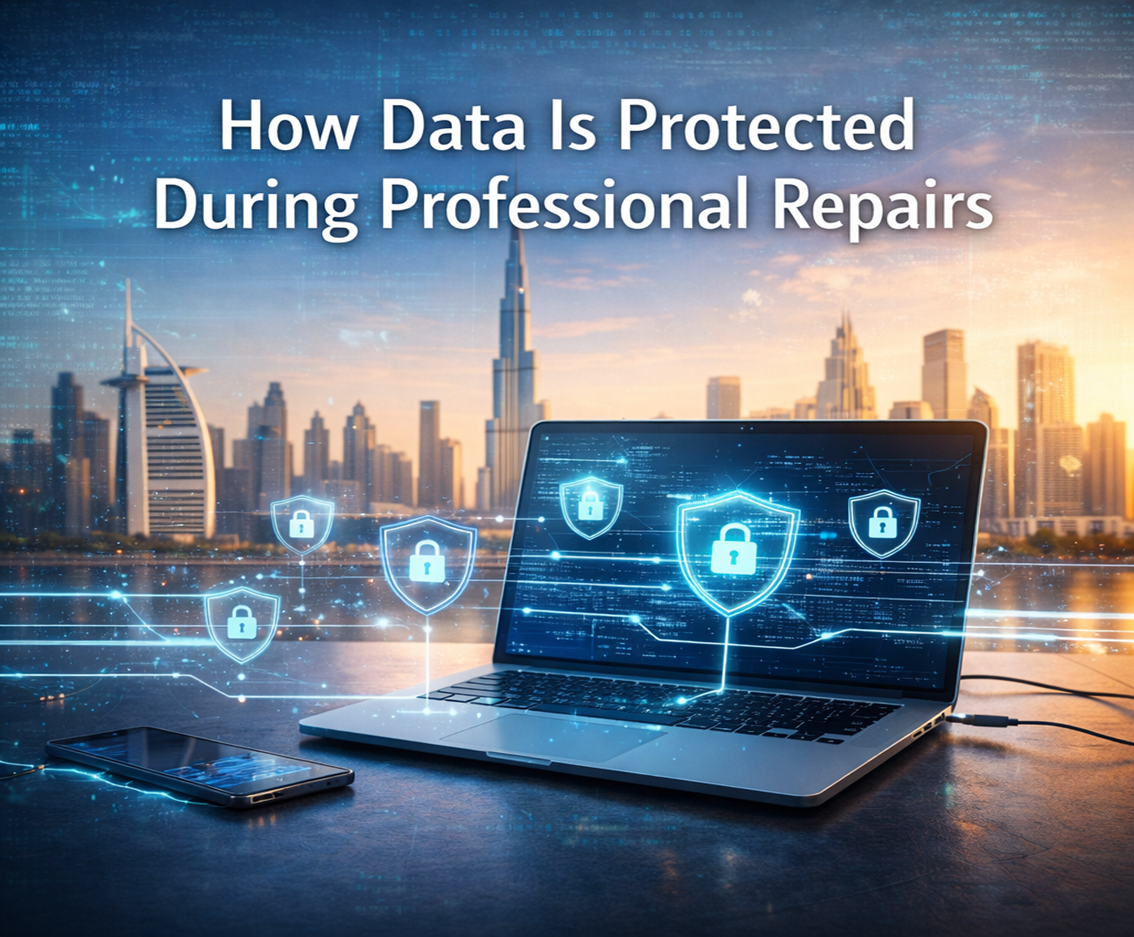
Our devices are more than just hardware. Smartphones, laptops, tablets, and desktops store personal memories, financial information, work documents, login credentials, and sensitive business data. When a device malfunctions and needs professional repair, one of the biggest concerns users have is simple but critical: Is my data safe?
Professional repair services understand this concern deeply. At Fixerman, data protection is treated as a core responsibility, not an optional add-on. From the moment a device is handed over to the final quality check before return, multiple safeguards are in place to ensure customer data remains private, secure, and untouched.
This article explains how professional repair providers protect data during repairs and why choosing a trusted service matters.
Understanding the Risks During Device Repairs
When a device is opened for repair, it may seem vulnerable. Components are exposed, systems may be tested, and in some cases software diagnostics are required. Without proper protocols, this stage could pose risks such as unauthorized access, accidental data loss, or data leakage.
However, professional repair centers mitigate these risks through structured processes, trained technicians, and strict internal policies. The goal is always to repair the device—not explore, copy, or alter personal data.
Strict Access Control from the Start
Data protection begins the moment a device is checked in. Professional repair facilities like Fixerman implement controlled access systems to limit who can physically handle customer devices.
Each device is logged, tagged, and tracked through the repair workflow. Only authorized technicians assigned to a specific repair can access that device. This prevents unnecessary handling and ensures accountability at every stage.
Workstations are monitored, and repair areas are restricted to staff only, minimizing the chance of unauthorized access.
Clear Data Handling Policies
Professional repair providers operate under strict data handling policies. These policies define exactly what technicians can and cannot do with customer devices.
For example:
-
Accessing personal files, photos, messages, or emails is strictly prohibited.
-
Testing is limited to essential system functions required to confirm the repair.
-
Any data interaction must be directly related to diagnosing or fixing the reported issue.
At Fixerman, technicians are trained to work around customer data, not through it. The device is treated as private property at all times.
Minimal Software Interaction
Many hardware repairs do not require any access to user data at all. Screen replacements, battery changes, charging port repairs, camera fixes, and speaker replacements are typically completed without unlocking the device or accessing the operating system.
When software diagnostics are necessary, professionals rely on system-level testing tools that evaluate performance without exposing personal content. These tools check functionality like boot behavior, sensor response, connectivity, and power management—without opening personal apps or files.
Customer-Controlled Security Measures
Customers also play a role in protecting their data, and professional repair centers actively encourage this.
Before submitting a device for repair, users are often advised to:
-
Keep their device locked with a PIN, password, or biometric security
-
Avoid sharing unlock codes unless absolutely required
-
Log out of sensitive accounts if possible
Fixerman respects these security measures and does not require customers to disable them unless the repair specifically involves software-level troubleshooting. Even then, customer consent is always obtained first.
Secure Workstations and Networks
Professional repair centers operate on secure internal networks that are isolated from public access. Diagnostic tools, firmware utilities, and testing software run on protected systems with limited internet connectivity.
This setup prevents data from being accidentally transferred, uploaded, or exposed during testing. It also protects customer devices from malware, unauthorized downloads, or unsafe external connections.
At Fixerman, secure infrastructure is part of the standard repair environment, not an afterthought.
Temporary Data Protection During Diagnostics
In rare cases where temporary data access is required to confirm a fix—such as testing file transfers, camera storage, or app stability—technicians use controlled methods that avoid personal content.
Temporary test files or dummy data may be used instead of customer files. Once testing is complete, these temporary files are removed immediately, ensuring the device is returned exactly as it was received.
No backups, copies, or screenshots of customer data are ever created during professional repairs.
Trained and Vetted Technicians
One of the most important elements of data protection is the people handling the device. Reputable repair services invest heavily in technician training and vetting.
Technicians at Fixerman are trained not only in technical skills but also in professional ethics and data privacy standards. They understand that trust is central to the repair relationship and that mishandling data can have serious consequences.
Clear disciplinary policies are in place for any violation of data privacy, reinforcing a culture of responsibility and respect.
Physical Security of Devices
When devices are not actively being repaired, they are stored in secure, designated areas. These storage spaces are monitored and protected against unauthorized access.
This ensures that devices are safe even during waiting periods, such as awaiting parts or final quality checks. The physical security of the device is just as important as digital protection.
Quality Checks Without Data Exposure
After a repair is completed, quality assurance testing is performed to ensure everything works correctly. This testing focuses on hardware functionality—screen responsiveness, battery performance, connectivity, audio, and sensors.
Professional services avoid browsing personal content during these checks. The goal is to confirm the repair’s success, not to explore the device.
Fixerman follows a checklist-based testing process that verifies performance while maintaining complete data privacy.
Transparency and Customer Trust
Professional repair providers understand that transparency builds confidence. Customers are informed about repair procedures, data handling policies, and what to expect before and after service.
If a repair requires any action that could affect data—such as a system reset or software reinstallation—this is communicated clearly in advance. No unexpected changes are made without customer approval.
This open communication is a key reason why customers trust Fixerman with their devices.
Why Choosing a Professional Repair Service Matters
Not all repair services follow the same standards. Informal or unverified repair options may lack proper data protection protocols, secure environments, or trained staff.
Choosing a professional service like Fixerman ensures that:
-
Your data remains private
-
Your device is handled responsibly
-
Repairs are performed safely and ethically
-
You receive accountability and support
In a world where digital data is invaluable, professional repair standards make all the difference.
Conclusion
Device repairs don’t have to mean risking your personal information. With the right professional repair service, your data stays protected from start to finish.
Through controlled access, secure systems, trained technicians, and transparent policies, Fixerman ensures that customers can repair their devices with confidence and peace of mind.